Animals > Horse

Horse

Equus ferus caballus

AUDIO GUIDE

0:00 0:00
Imagine history without horses: no carriages, no messengers at a gallop, no great farm fields. Since it was domesticated about four thousand years ago on the steppes of Eurasia, the horse has changed the world. Its eyes are the largest of any land mammal, and it can see almost everything around it. It can doze on its feet without falling, thanks to a mechanism that locks its legs. And it talks with its ears: if it points them toward you, you have its full attention. It is also very observant. Studies show that horses can tell a smiling face from an angry one, and that they remember people. Here in Andalusia, the horse is part of our culture: this land saw the birth of the Pura Raza Española. Elegance, memory and nobility on four legs.

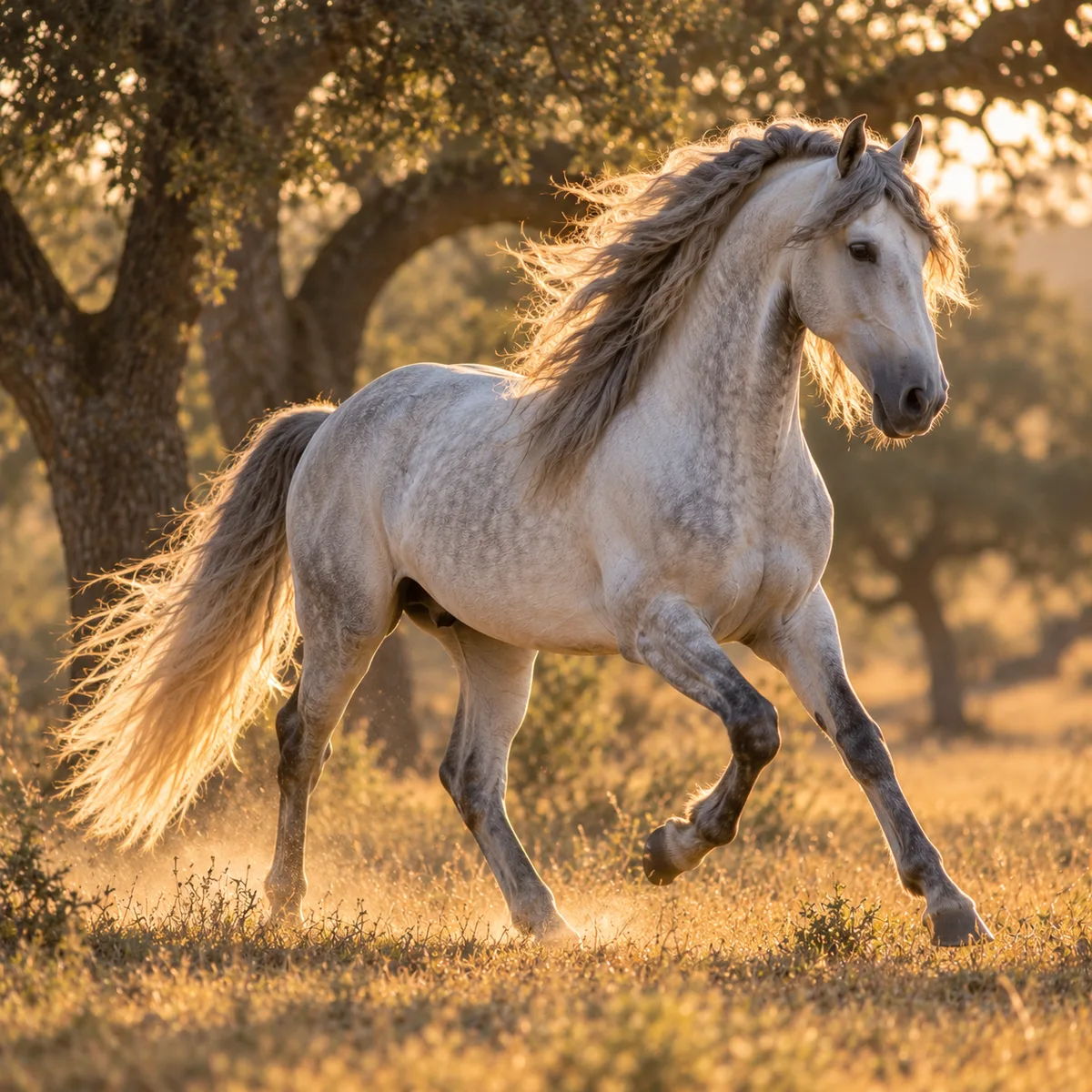
Fun facts

  • It was domesticated about four thousand years ago on the steppes of Eurasia and has changed history.
  • Its eyes are the largest of any land mammal, and it can see almost everything around it.
  • It can doze on its feet without falling, thanks to a mechanism that locks its legs.
  • It talks with its ears: if it points them toward you, you have its full attention.
  • It can tell a smiling face from an angry one and remembers people. The Pura Raza Española (Andalusian horse) was born in Andalusia.

General information

Height Between 1.4 and 1.7 m at the shoulder, depending on the breed
Weight Between 380 and 550 kg
Diet Herbivore. Grass, hay and grains.
Speed Up to 60 km/h at a gallop
Gestation About 11 months, a single foal
Life expectancy 25-30 years
Habitat Grasslands and steppes; domesticated worldwide

Multimedia