Animals > Hippopotamus

Hippopotamus

Hippopotamus amphibius

AUDIO GUIDE

0:00 0:00
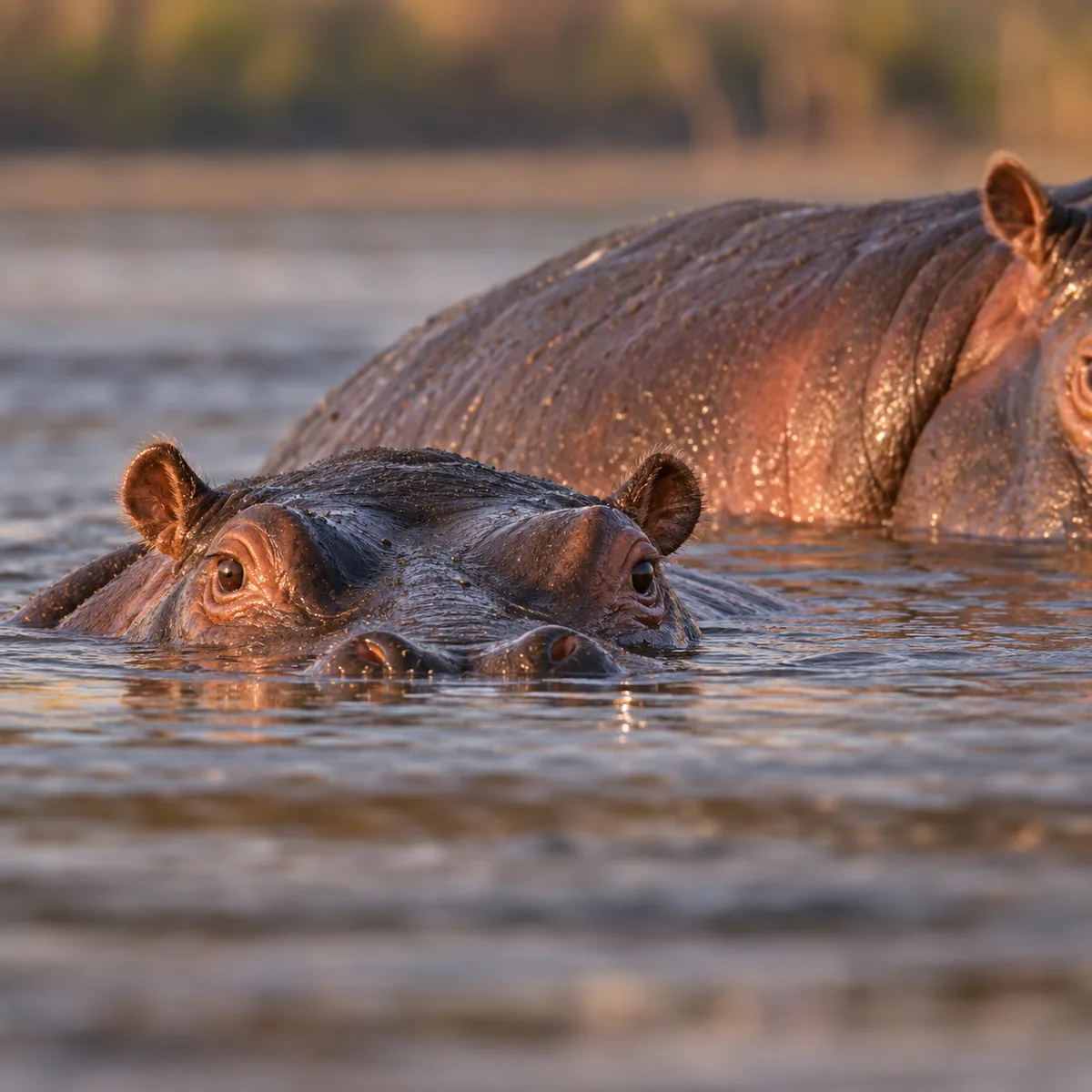
It spends the day in the water, comes out at night to eat and can weigh more than three tons. This is the hippopotamus, the “river horse”… although its closest relatives are not horses, but whales and dolphins. Oddly enough, it cannot swim: it walks along the bottom and holds its breath for about five minutes. Its eyes, ears and nose sit on top of its head, so it keeps watch on everything while barely peeking out. And when the sun hits it, its skin secretes a reddish liquid that works as a natural sunscreen. It looks calm, but it is one of the most feared animals in Africa, with a mouth that opens up to one hundred fifty degrees and tusks half a meter long. Today it is listed as vulnerable. Taking care of Africa’s rivers means taking care of it.

Fun facts

  • Its closest living relatives are not horses, but whales and dolphins.
  • It cannot swim: it walks along the bottom and holds its breath for about five minutes.
  • Its eyes, ears and nose sit on top of its head, so it keeps watch on everything while barely peeking out.
  • Its skin secretes a reddish liquid that works as a natural sunscreen.
  • Its mouth opens up to 150 degrees and its tusks are half a meter long: it is one of the most feared animals in Africa.

General information

Height About 1.5 m at the shoulder; up to 4 m long
Weight Between 1,300 and over 3,000 kg
Diet Herbivore. Comes out at night to graze and can eat about 40 kg per night.
Speed Up to 30 km/h in short sprints
Gestation About 8 months, a single calf
Life expectancy 40-50 years
Habitat Rivers, lakes and wetlands of sub-Saharan Africa

Multimedia