Animals > Black kite

Black kite

Milvus migrans

AUDIO GUIDE

0:00 0:00
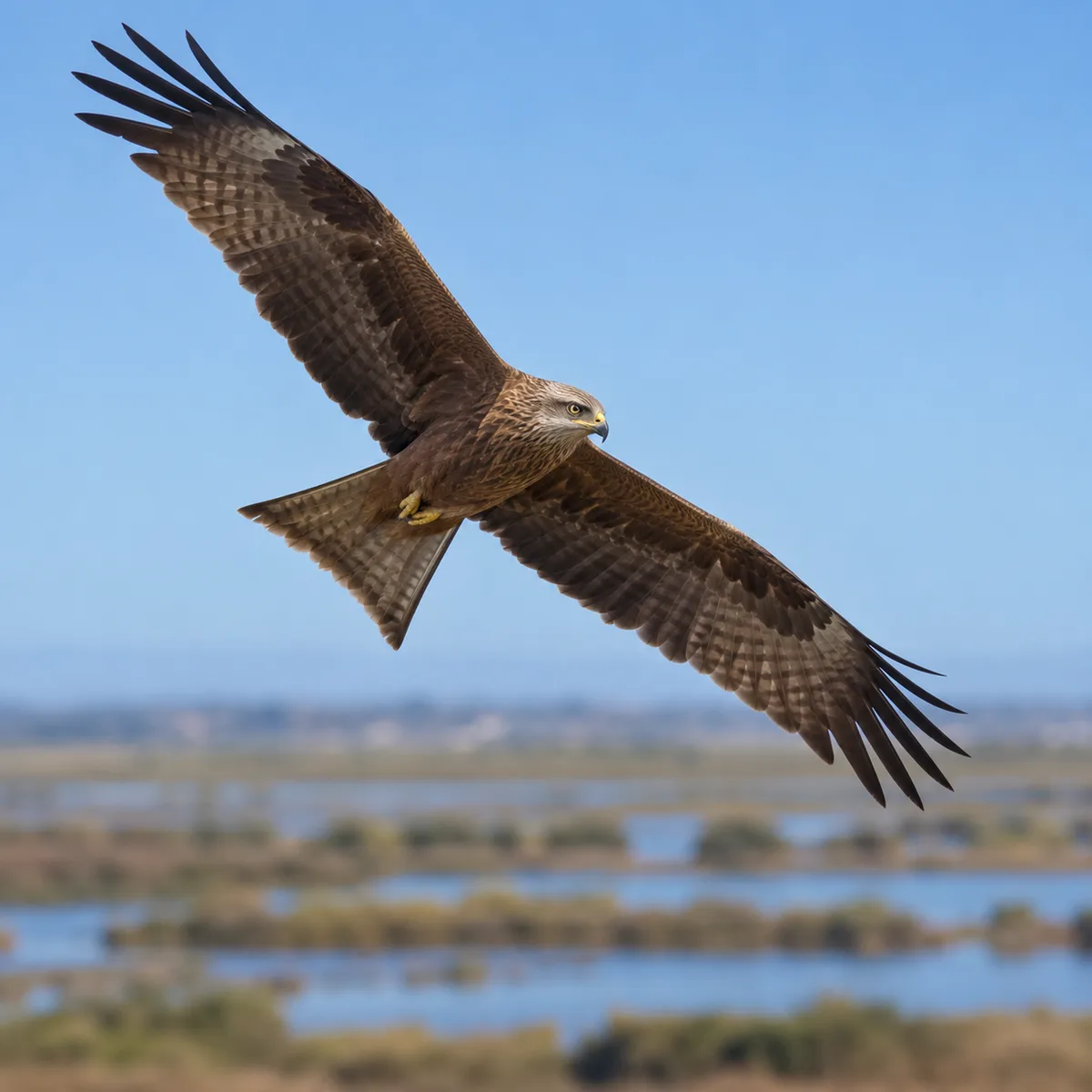
Every spring, thousands of birds of prey cross the Strait of Gibraltar from Africa. Among the first to arrive is the black kite, which comes to breed on the peninsula and heads back south at the end of summer. It is one of the most abundant birds of prey in the world, and also one of the cleverest. It hunts, fishes, scavenges carrion… and turns its beak up at almost nothing. In Doñana, scientists discovered something surprising: the black kite decorates its nest with plastic and white rags. And it is not on a whim: the more decorated the nest, the stronger the pair that occupies it. It is a warning to other kites: this territory has an owner. And in Australia, it has been seen picking up burning branches to spread fires and hunt the animals fleeing from them. A neighbor in our skies with plenty of ingenuity.

Fun facts

  • Every spring it crosses the Strait of Gibraltar from Africa to breed on the peninsula, and returns south at the end of summer.
  • It is one of the most abundant birds of prey in the world and also one of the cleverest: it hunts, fishes and scavenges carrion.
  • In Doñana it was found to decorate its nest with plastic and white rags: the more decorated the nest, the stronger the pair that occupies it.
  • In Australia, it has been seen picking up burning branches to spread fires and hunt the animals fleeing from them.

General information

Height Between 55 and 60 cm; wingspan of 1.3 to 1.5 m
Weight Between 0.6 and 1 kg
Diet Omnivore. Carrion, fish, small vertebrates and insects.
Gestation Incubation of 31 to 38 days
Life expectancy About 15 years
Habitat Wetlands, riverbanks, dehesas and farmland of Europe, Asia, Africa and Australia

Multimedia