Animals > Storks

Storks

Ciconia ciconia (white stork) · Ciconia abdimii (Abdim's stork)

AUDIO GUIDE

0:00 0:00
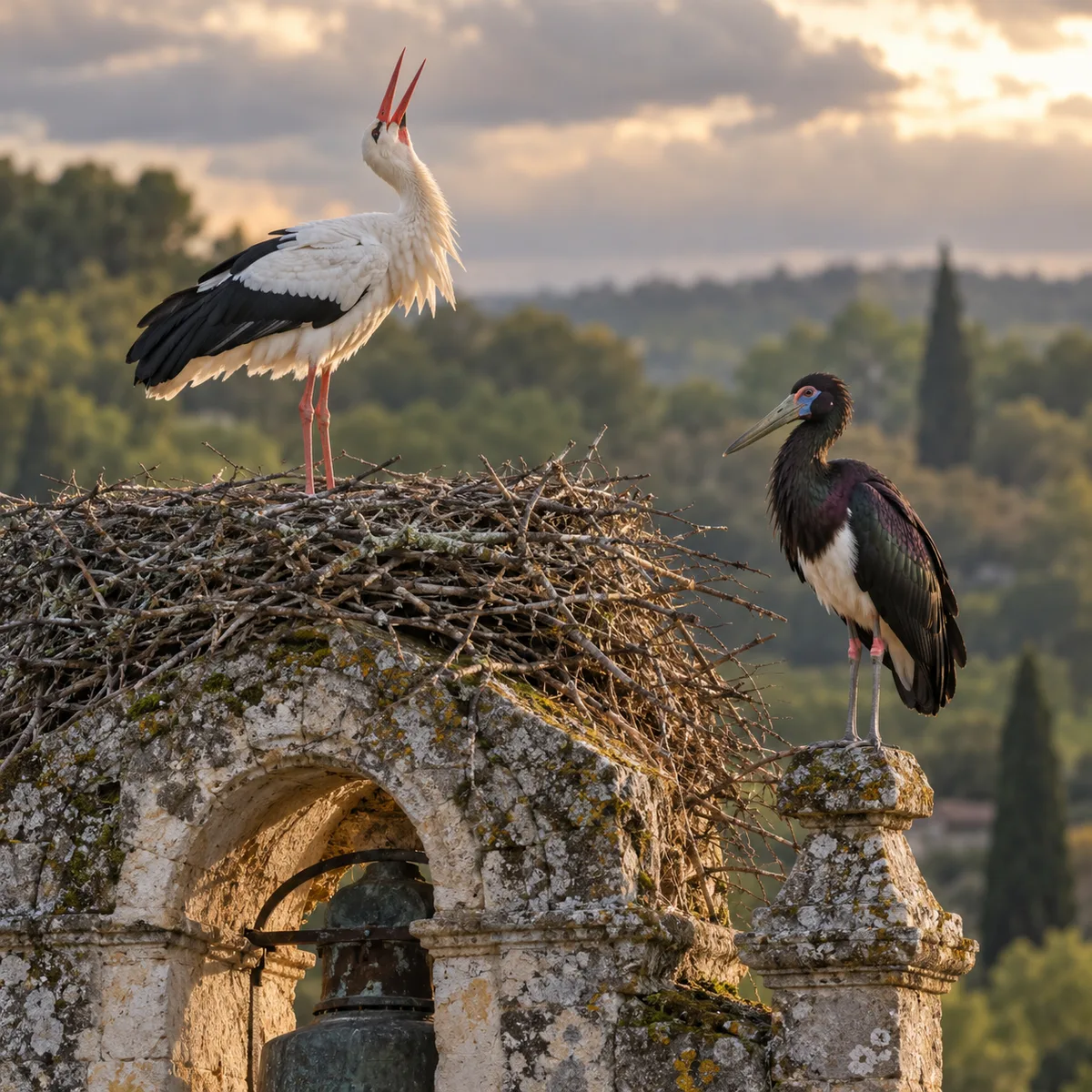
Clack, clack, clack. If you hear that sound high up on a bell tower, it is a stork greeting its mate. Storks have almost no voice: they communicate by clattering their bills, known as bill-clattering. The white stork is a very familiar neighbor: Spain has one of the largest populations in Europe. It builds enormous nests that it reuses year after year, and although it used to spend the winter in Africa, many now stay here all year round. Its cousin, the Abdim’s stork, is the smallest of them all. It lives in Africa and travels following the rains, which is why in many places it announces the arrival of the wet season. And it is a farmer’s best friend: it eats grasshoppers and locusts. Two great travelers that soar on warm air, barely flapping their wings.

Fun facts

  • They have almost no voice: they communicate by clattering their bills, known as bill-clattering.
  • Spain has one of the largest white stork populations in Europe, and many no longer migrate to Africa.
  • They build enormous nests that they reuse year after year.
  • The Abdim's stork, the smallest of them all, travels following the rains and announces the wet season.
  • They are allies of farmers: they eat grasshoppers and locusts.

General information

Height White stork: about 1 m tall; wingspan up to 2 m
Weight Between 1.5 and 4.5 kg
Diet Carnivore. Insects, frogs, small rodents and earthworms.
Gestation Incubation of about 33 days
Life expectancy 20-30 years
Habitat Open fields and wetlands of Europe and Africa

Multimedia