Animals > European rabbit

European rabbit

Oryctolagus cuniculus

AUDIO GUIDE

0:00 0:00
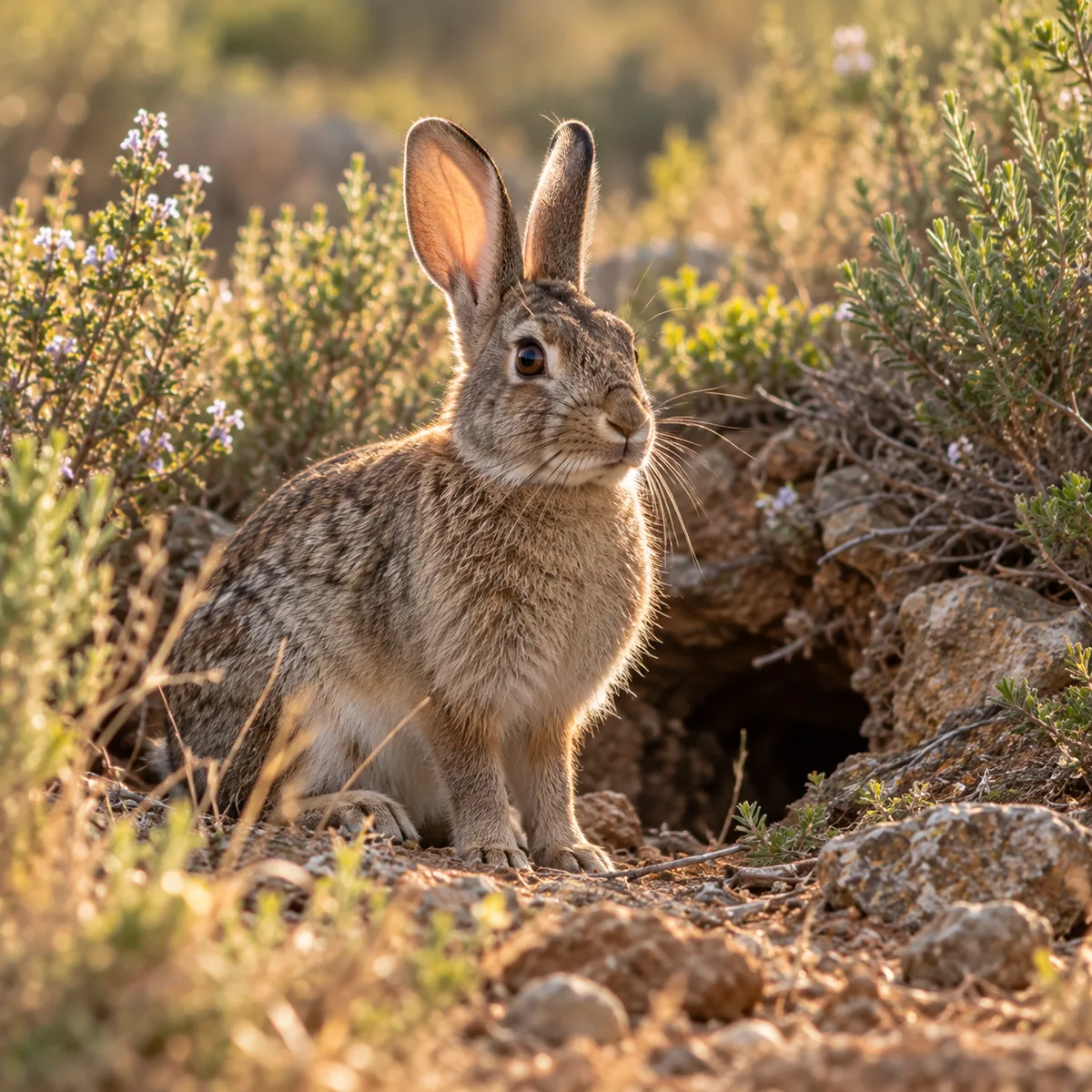
It may seem like a very ordinary animal, but this little neighbor is one of the great protagonists of our land. The rabbit is native to the Iberian Peninsula, and from here it spread to the rest of the world. In fact, all domestic rabbits descend from wild Iberian rabbits. It is the keystone of the Mediterranean scrubland: more than thirty species of predators depend on it, such as the Iberian lynx or the Spanish imperial eagle. Without rabbits, there are no lynxes. It lives in colonies with burrows full of tunnels, and when it detects danger it thumps the ground with its hind legs to warn the others. Incredible as it may seem, in its native land it is endangered, because of disease and habitat loss. Protecting the rabbit means protecting the entire Mediterranean scrubland.

Fun facts

  • It is native to the Iberian Peninsula and all domestic rabbits descend from wild Iberian rabbits.
  • More than thirty species of predators depend on it, such as the Iberian lynx or the Spanish imperial eagle.
  • It lives in colonies with burrows full of tunnels.
  • When it detects danger, it thumps the ground with its hind legs to warn the others.
  • In its native land it is endangered by disease and habitat loss.

General information

Height Between 35 and 45 cm
Weight Between 1.2 and 2 kg
Diet Herbivore. Grass, shoots and tender bark.
Speed Up to 50 km/h
Gestation About 30 days, 3 to 7 kits
Life expectancy 1-3 years in the wild
Habitat Mediterranean scrubland, dehesas and fields of the Iberian Peninsula

Multimedia