Animals > Dromedary

Dromedary

Camelus dromedarius

AUDIO GUIDE

0:00 0:00
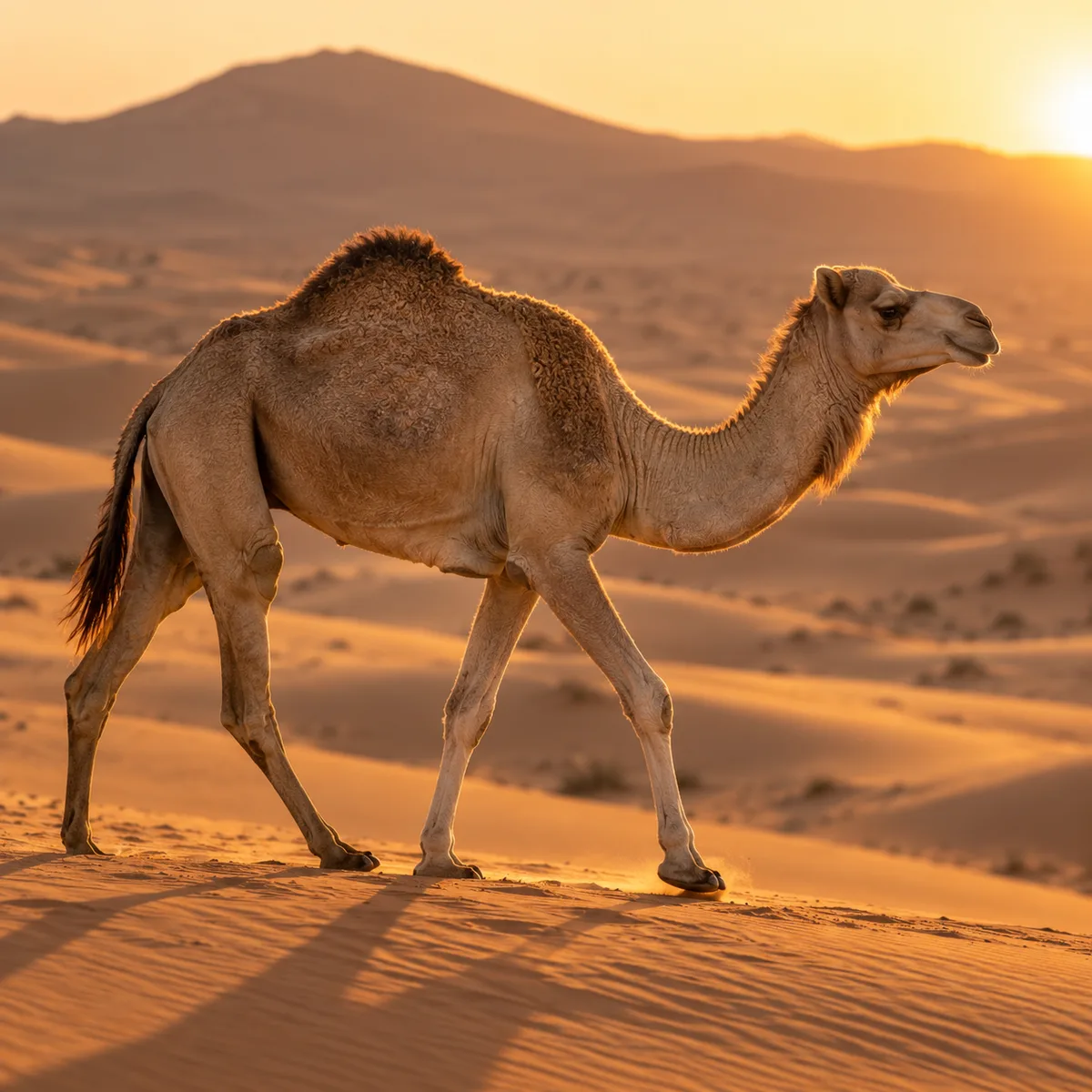
If there is an animal made for the desert, this is the one: the dromedary, the one-humped camel. And let’s start with a myth: the hump is not full of water, but of fat, a pantry for days without food. It manages water in a different way. It can lose a quarter of its body weight in water without a problem, and then drink more than one hundred liters in a few minutes. It has a double row of eyelashes and closes its nostrils when the sand blows. It even lets its body temperature rise several degrees during the day so it doesn’t waste water sweating. It was domesticated about three thousand years ago and has accompanied desert peoples as transport, food and shelter. Today there are no wild dromedaries left: all of them live alongside people. A true survivor.

Fun facts

  • The hump is not full of water, but of fat: a pantry for days without food.
  • It can lose a quarter of its body weight in water without a problem and drink more than one hundred liters in a few minutes.
  • It has a double row of eyelashes and closes its nostrils when the sand blows.
  • It lets its body temperature rise several degrees during the day so it doesn't waste water sweating.
  • It was domesticated about three thousand years ago; today there are no wild dromedaries left.

General information

Height Between 1.8 and 2 m to the hump
Weight Between 400 and 600 kg
Diet Herbivore. Thorny plants, shrubs and dry grasses.
Speed Up to 65 km/h in short sprints
Gestation About 13 months, a single calf
Life expectancy 40-50 years
Habitat Deserts and arid regions of Africa and the Middle East

Multimedia