Animals > Giraffe

Giraffe

Giraffa giraffa · Giraffa camelopardalis · Giraffa reticulata

AUDIO GUIDE

0:00 0:00
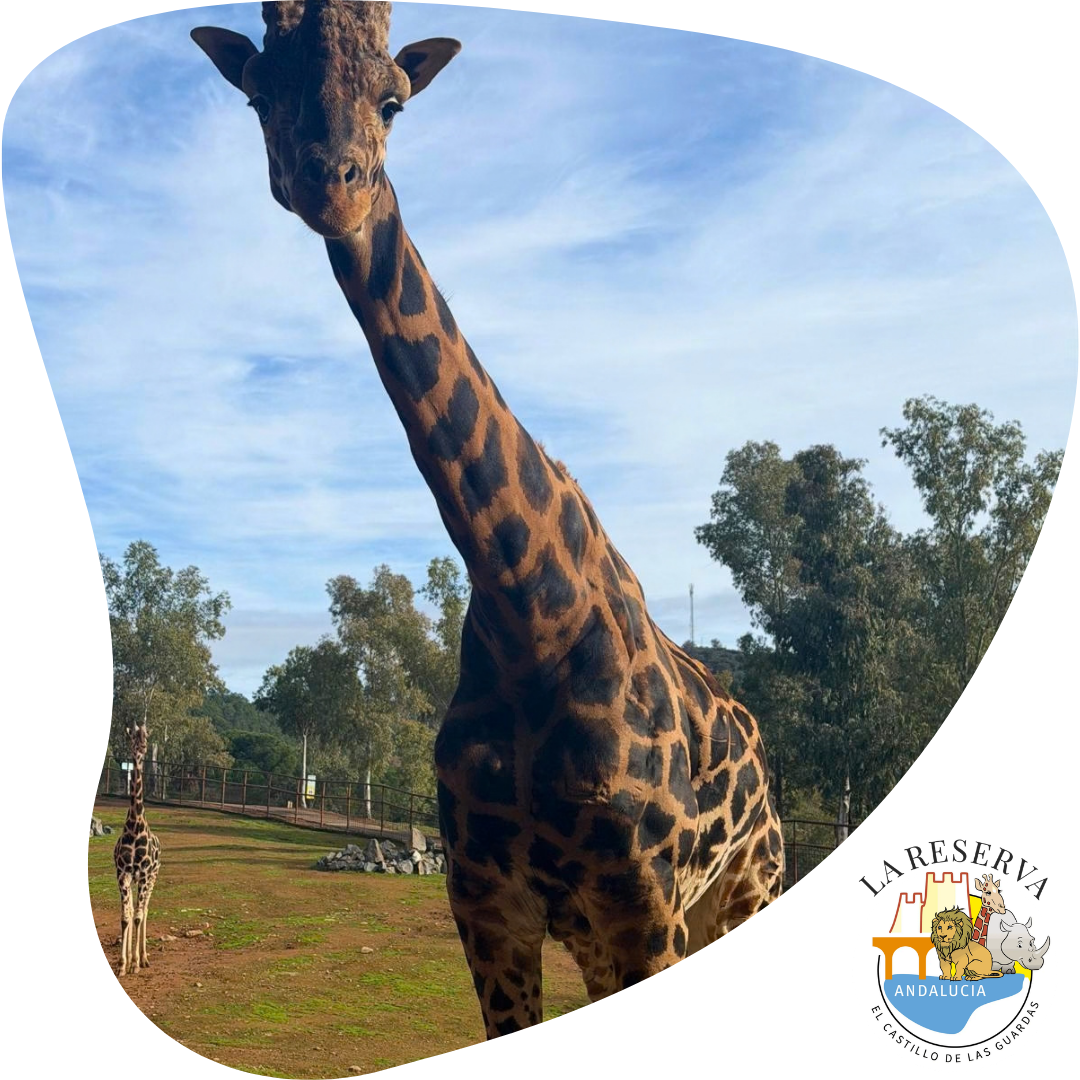
The giraffe is the tallest animal on the planet. An adult male can exceed 5 meters, which allows it to reach leaves that no other herbivore can and to watch over the savanna from above. For more than two centuries, all giraffes were thought to belong to a single species. Today we know that is not the case: in 2025, the International Union for Conservation of Nature (IUCN) officially recognized four distinct species. At La Reserva you can meet three of them.

Three giraffes, three coats

The skin pattern is the best clue for telling them apart. And, like our fingerprints, no two giraffes have the same spots.

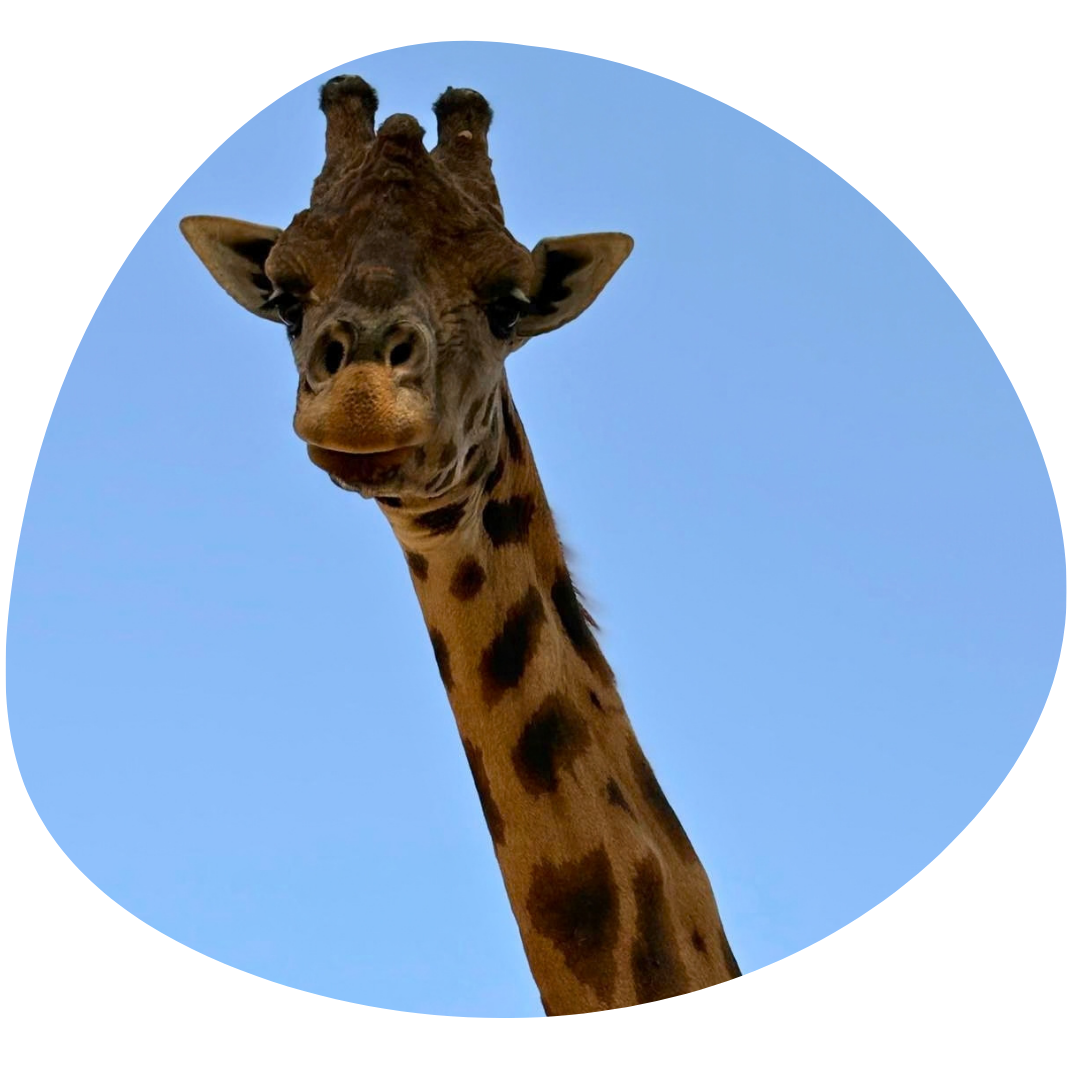
Southern giraffe

Giraffa giraffa

It lives in southern Africa, from Angola and Namibia to South Africa and Mozambique. Its spots are rounded or star-shaped, on a light background, and extend down the legs to the hooves. It is the most numerous species and its populations continue to grow.
Northern giraffe

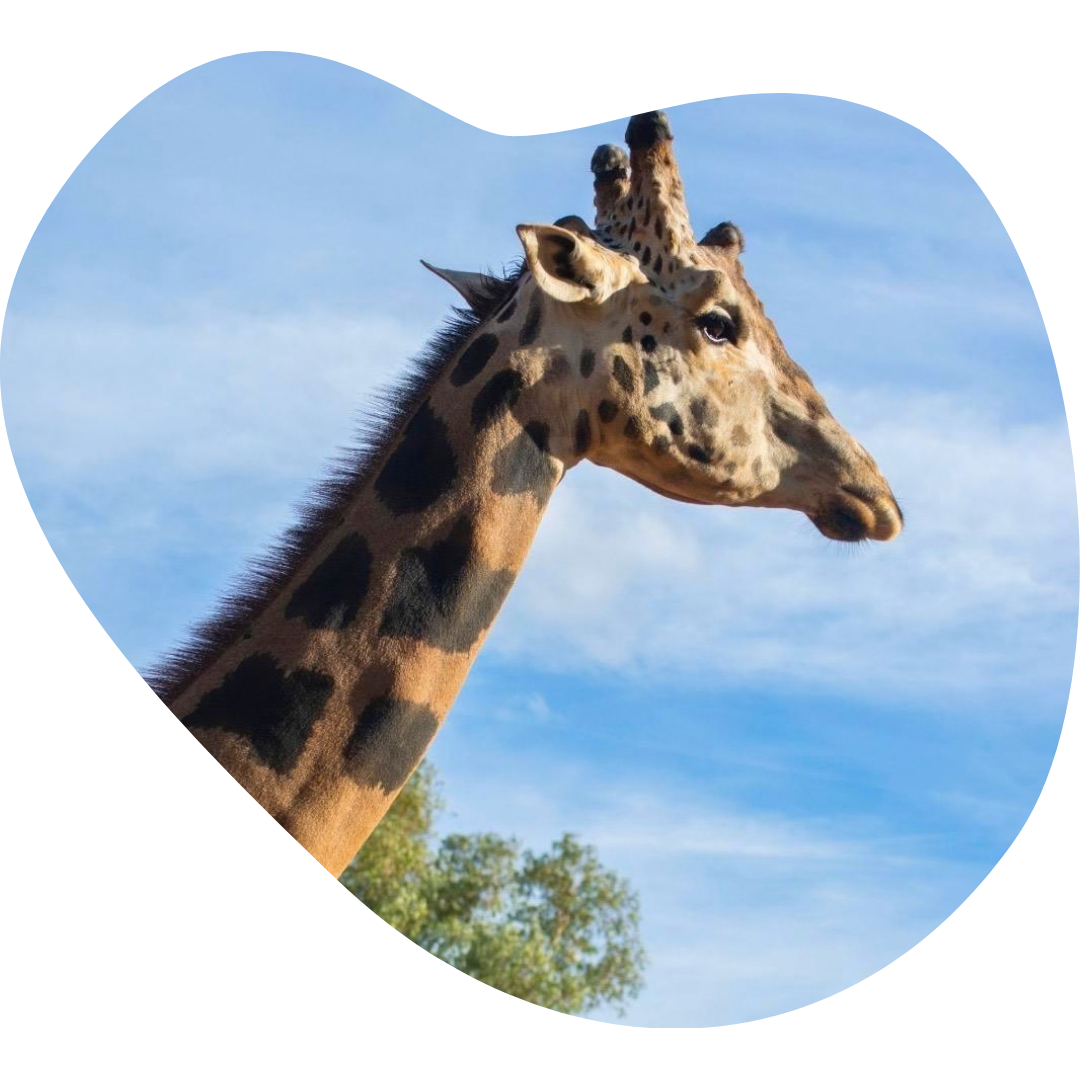
Giraffa camelopardalis

It lives in scattered populations from Niger, in West Africa, to Uganda, Kenya and Ethiopia. It has large spots with irregular edges and often white legs below the knee, as if it were wearing socks. Many males have a third bump on the forehead. Its scientific name means something like “camel with leopard spots”. It is the rarest of the four species.

Reticulated giraffe

Giraffa reticulata

Native to northern Kenya, southern Ethiopia and Somalia. It has the most striking coat: large reddish-brown patches separated by thin white lines, like a net. Hence its name, from the Latin reticulum, “little net”.

A record-breaking body

  • Its neck can measure almost 2 meters, yet it has only seven vertebrae, the same number as ours. Each one, however, can be over 25 centimeters long.
  • Its dark blue tongue measures up to 50 centimeters and is prehensile: it uses it to pluck leaves from among the thorns of acacias. Its dark color is believed to protect it from the sun.
  • To pump blood up to its head it needs a heart of about 11 kilos and a blood pressure that is double that of humans.
  • The spots are not just decoration: beneath each one there is a network of blood vessels that helps release heat.
  • After a gestation of about 15 months, the calves are born with a drop of almost 2 meters. Within an hour they are already standing.
  • Males and females both have ossicones, "horns" covered in skin and hair. Those of the males are usually bald from fighting, in which they swing their necks and strike each other with their heads.
  • Although they seem silent, giraffes have been recorded emitting a low humming sound at night.

General information

Height Over 5 m (males); about 4.5 m (females)
Weight Males around 1,200 kg; females about 800 kg
Diet Herbivore. Leaves, shoots and fruit, mainly acacia. It can eat more than 30 kg a day.
Speed Over 50 km/h in short sprints
Gestation About 15 months, a single calf
Life expectancy About 25 years in the wild
Habitat Savannas and open woodlands of sub-Saharan Africa

Multimedia